
What is Rodent Exclusion?
Rodent exclusion is the permanent structural sealing of a building exterior to physically prevent rats and mice from entering. In Friendswood, technicians seal the builder’s gap behind gutters, secure foundation brick weep holes with copper mesh, cap roof vents with galvanized steel, and seal AC chase penetrations with chew-proof sealants. Unlike monthly chemical baiting, permanent exclusion terminates infestations at the structural barrier.
Traditional pest control focuses on recurring extermination. A technician arrives monthly, inspects bait boxes on your perimeter, tosses rodenticide blocks into your attic, and bills you a recurring fee. This approach fails to address the root problem. Rodents enter residential structures because physical openings exist. Until those structural breaches are permanently fortified with chew-proof materials, outdoor rodent populations will continuously replace captured animals.
Exclusion treats rodent control as a trade construction discipline rather than chemical spraying. By hardening every exterior gap down to one quarter of an inch, we eliminate entry points and protect your structural framing, attic insulation, and electrical systems.
Diagnostic Checklist: 8 Indicators Your Home Requires Structural Proofing
Homeowners across Galveston County often mistake early warning signs of rodent entry for simple house settling or weather noise. If your property exhibits two or more of the following physical indicators, structural exclusion is necessary:
- Nocturnal Attic Scratching: Repeated scuffling, dragging, or light tapping sounds audible between 10 PM and 5 AM, particularly above the master suite or kitchen soffits.
- Grease Marks on Siding (Sebum Trails): Dark, oily rub marks along exterior brick corners, foundation ledges, or gutter downspouts where rats repeatedly compress their oily fur against building surfaces.
- Chewed Attic Vent Screens: Shredded plastic or bent aluminum screening on gable vents, ridge vents, or off-ridge roof louvers.
- Pine Cone and Acorn Caches in Gutters: Accumulations of masticated oak acorns, pine nuts, or pecan shells stacked behind gutter lines, indicating active roof rat feeding perches.
- Compressed Insulation Runways: Distinct, smooth trenches carved through blown-in fiberglass or cellulose attic insulation leading toward exterior eaves.
- Ammonia Odors in Laundry or Pantry Closets: Musty, sharp chemical odors radiating from wall cavities where rodent urine has concentrated behind baseboards.
- Tooth Marks on PVC and PEX Pipes: Parallel, chisel-like grooves etched into plastic plumbing lines, irrigation supply feeds, or electrical conduit.
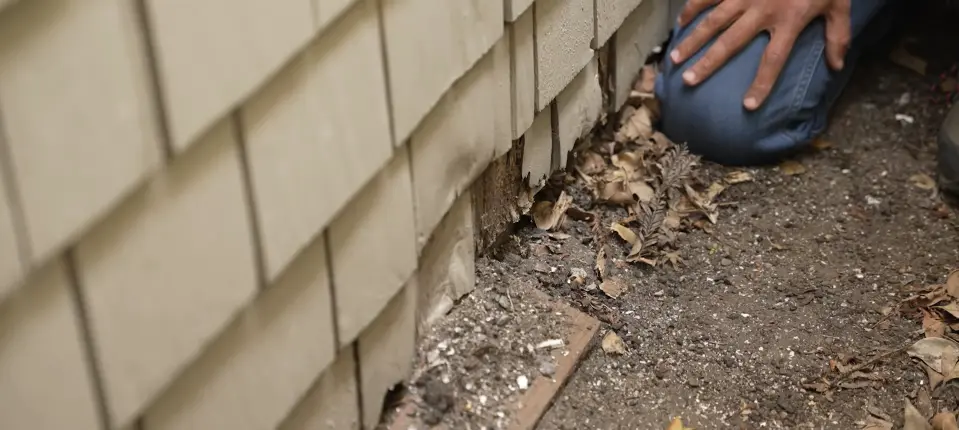
- Exterior Weep Hole Debris: Small piles of foundation sand, dried mortar dust, or pulled insulation resting directly beneath exterior brick weep holes.
Technical Exclusion Specifications & Material Standards
Rodents possess sharp incisors coated in iron-hard enamel capable of exerting 12,000 pounds of pressure per square inch. Standard building products such as expanding foam, vinyl siding, caulk, and aluminum screen cannot stop persistent gnawing. We utilize commercial-grade, trade-tested materials specifically engineered to resist rodent teeth and Gulf Coast weather extremes.
| Vulnerable Architectural Area | Standard Failure Point | Our Exclusion Material | Durability Rating |
|---|---|---|---|
| Builder’s Gap (Roofline / Fascia) | Open gap behind gutters; roof rats enter attic | 1/4-inch 23-gauge galvanized hardware cloth + chew-proof sealant | Lifetime structural durability |
| Exterior Brick Weep Holes | Open weep slots allow mice directly into wall cavities | Pure woven copper mesh (rust-proof, breathable) | Resists teeth, allows brick drainage |
| Roof Vents & Off-Ridge Louvers | Thin aluminum or plastic chewed open by squirrels | Custom 18-gauge galvanized steel protective vent cages | Resists squirrels, raccoons, and rats |
| AC Chase Penetrations | Sun-rotted rubber insulation creates baseball-sized void | Metal lath backing packed with elastomeric polyether sealant | 100% weather and chew proof |
| Lead Plumbing Roof Boots | Soft lead flashing chewed flat by squirrels | Heavy-gauge steel wire mesh cap collars bolted to decking | Prevents roof pipe water leaks |
| Pier and Beam Crawlspace Skirts | Rotting wood lattice or shallow trenching | 1/4-inch galvanized hardware cloth trenched 12 inches below grade | Blocks Norway rat burrowing |
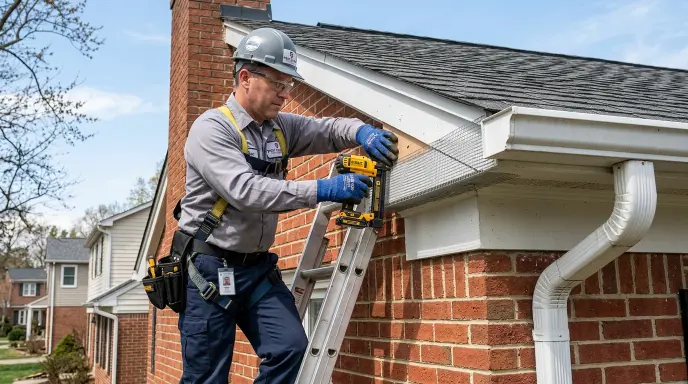
1. Galvanized Hardware Cloth (1/4-Inch 23-Gauge Steel)
Standard chicken wire has 1-inch openings that allow mice and juvenile rats to slip through effortlessly. We install heavy-dip galvanized hardware cloth with 1/4-inch square apertures. This material is hot-dipped in zinc to prevent coastal rust in Friendswood’s high humidity. It is secured to wooden sub-fascia and framing using heavy steel staples and self-tapping screws every three inches.
2. Pure Breathable Copper Mesh
Brick veneer construction requires weep holes at the foundation line to discharge internal condensation and moisture. Plugging weep holes with expanding foam or cement traps moisture inside the wall cavity, leading to expensive mold damage. Expanding foam is also chewed through within 48 hours. We tightly pack weep holes with non-rusting copper mesh. Copper mesh allows water vapor to drain freely while providing an abrasive barrier that cuts the gums of attempting rodents, discouraging them permanently.
3. Commercial Elastomeric Polyether Sealants
Standard silicone and acrylic painters caulks crack and peel after one summer in the Texas sun. We utilize industrial-grade elastomeric polyether sealants such as Sikaflex or MasterSeal NP1. These commercial compounds maintain flexibility through 70-degree winter drops and 105-degree August heat, expanding and contracting with building materials without pulling away or degrading.
Detailed Breakdown of Friendswood Architectural Entry Points
Friendswood features a diverse mix of residential architectural eras, ranging from 1960s ranches in Polly Ranch Estates and 1970s pier-and-beam properties near Cowart Creek to sprawling 1990s brick two-stories in Wilderness Trails and modern builds in West Ranch. Each construction type presents predictable vulnerabilities.
The Two-Story Builder’s Gap
In two-story homes with complex rooflines, roof framing frequently transitions across different elevations. Builders rarely install sub-fascia flush with the roof decking behind the gutter line, leaving an open channel commonly referred to as the builder’s gap. Roof rats (Rattus rattus) utilize mature oak branches to reach the gutter, navigate along the metal channel, and enter the lower attic. Once inside, they exploit open wall chases to travel directly between floors.
Outdoor Air Conditioning Refrigerant Chase
Modern homes in Friendswood feature central heat pumps and split systems. The copper refrigerant lines, electrical conduit, and condensation drains exit the exterior wall through a shared sleeve. Over three to five years, UV radiation and high humidity rot the black foam pipe insulation into brittle powder. This leaves a void the diameter of a baseball directly into the drywall cavity. Rats and mice detect cool air escaping in summer and warm air in winter, utilizing the line as an express pathway into the kitchen or utility room.
Gable and Soffit Return Junctions
Where the sloping roofline of a gable meets an exterior brick or HardiePlank wall, a small triangular pocket known as the soffit return is created. Sub-contractors often cap this return with thin trim metal that is fastened with only two nails. Roof rats push past the loose metal edge with their snouts, squeezing their flexible ribcages through spaces no larger than a quarter.
Step-by-Step 4-Stage Protocol for Permanent Home Exclusion
Permanent exclusion requires a disciplined, sequential execution. Attempting to seal a house before addressing the internal rodent population can trap aggressive animals inside, forcing them to chew through interior drywall, PVC lines, and cabinets in search of food and water.
Stage 1: The Master Diagnostic Blueprint
Our technicians perform a comprehensive 28-point inspection starting at the roof crown and working systematically down to the foundation footing. We inspect all roof valleys, ridge vents, flashing transitions, chimney caps, plumbing vents, soffit returns, brick veneer weep lines, and foundation utility penetrations. Every opening down to 1/4 inch is marked, mapped, and photographed for the property owner.
Stage 2: Immediate Interior Mechanical Trapping
Before closing exterior entry points, we deploy heavy-duty mechanical snap traps along primary travel runs in the attic, crawlspace, and utility voids. We never deploy rodenticide poisons inside a home. We monitor and check the trap lines on a rigorous schedule, clearing carcasses until trap activity drops to absolute zero.
Stage 3: Structural Exterior Hardening
Once the interior colony is depleted, our crew installs permanent galvanized steel barriers, copper mesh, and elastomeric seals across all identified entry points. Every installation follows clean architectural lines, ensuring that steel mesh and metal flashing blend naturally with your home’s exterior trim, brickwork, and paint colors.
Stage 4: Attic Sanitation & Pheromone Neutralization
Rodents leave behind heavy deposits of urine, pheromones, and fecal matter that act as chemical attractants for outdoor populations. In the final stage, our crew sanitizes contaminated attic surfaces, removes fouled insulation, and applies commercial bio-enzymatic biocides to neutralize pheromone trails and airborne pathogen risks.
Economic Cost Analysis & Transparent Pricing Factors
Generic pest companies hide their pricing behind mandatory sales visits. At Friendswood Rodent Shield, we maintain transparent starting rates based on concrete property variables. The overall investment for complete structural rodent exclusion depends on several structural criteria:
- Linear Footage of Roofline and Eaves: Larger multi-story homes with complex hip-and-valley rooflines require significantly more galvanized hardware cloth and ladder work than compact single-story ranches.
- Roof Pitch and Accessibility: Steep-pitch roofs (8/12 or 10/12 pitch) require safety harness rigging, roof brackets, and specialized staging, which increases labor time.
- Number of Weep Holes and Low-Level Penetrations: Full brick veneer homes require copper mesh packing across dozens of perimeter weep slots, gas pipe entries, and outdoor spigot penetrations.
- Degree of Subfloor and Crawlspace Involvement: Pier and beam homes requiring trenching and below-grade wire mesh skirting require substantial manual excavation compared to standard concrete slabs.
- Attic Contamination Severity: Minor localized droppings require basic spot sanitization, whereas severe infestations necessitate full insulation extraction and negative-air HEPA vacuuming.
Estimated Investment Ranges for Friendswood Properties
- Diagnostic Roof-to-Foundation Inspection: Comprehensive physical audit credited 100% toward approved exclusion service.
- Targeted Mechanical Trapping Program: Complete active colony extraction without recurring poison contracts.
- Complete Home Structural Exclusion (Single-Story Slab): Custom estimated based on measured linear roofline footage and vent count.
- Complete Home Structural Exclusion (Two-Story Complex Roofline): Includes full builder gap sealing, dormer valleys, and heavy-gauge vent cages.
- Comprehensive Pier & Beam Crawlspace Trenching: Full perimeter below-grade galvanized wire skirt with outward horizontal L-apron.
Structural Exclusion vs. Alternative Methods
| Operational Feature | Friendswood Rodent Shield Structural Exclusion | National Pest Chains (Monthly Baiting) | Do-It-Yourself (DIY Traps & Spray Foam) |
|---|---|---|---|
| Primary Method | Heavy galvanized steel, copper mesh, elastomeric seals | Exterior plastic bait boxes & interior poison blocks | Wooden snap traps & yellow can spray foam |
| Permanent Entry Sealing | Yes, 100% of openings sealed to 1/4 inch | No, holes remain open so rodents return to bait | Ineffective, rodents chew through foam in hours |
| Dead Animal Smell Risk | Zero, no internal poisons deployed | Very high, poisoned rodents die inside wall cavities | Medium, unmonitored traps create foul odors |
| Pheromone Neutralization | Yes, commercial enzymatic sanitization | Rarely offered | None, odors attract new outdoor colonies |
| Warranty Coverage | 1-Year Renewable Exclusion Guarantee | Only guarantees refilling bait stations | None |
| Long-Term Cost | Flat one-time investment | Accumulating monthly subscription fees that never end | Repeated trap purchases + drywall and pipe repair |
Frequently Asked Questions About Rodent Exclusion
How long does a full home rodent exclusion take to complete?
A standard residential exclusion on a 2,500 square foot Friendswood home typically requires one to two full working days. Day one focuses on the roofline, chimney flashing, off-ridge vent cages, and high-altitude builder’s gaps. Day two addresses low-level brick weep holes, AC chase penetrations, and interior trap line monitoring.
Will exclusion change the exterior appearance of my house?
No. Our technicians take great pride in aesthetic craftsmanship. Galvanized hardware cloth is tucked neatly behind gutter lips and secured beneath soffit trim where it remains completely invisible from the street. Steel vent covers and flashing are painted or color-matched to your trim or roofing materials.
Can rats chew through expanding foam insulation?
Yes. Standard yellow expanding foam consists of lightweight polyurethane that offers zero physical resistance to rodent teeth. Rats and mice can chew through a two-inch plug of cured expanding foam in less than 30 minutes. We only use foam when packed with heavy copper mesh or backing steel lath.
What happens if a rodent gets inside after the exclusion is finished?
We back our full structural exclusion projects with our 1-Year Renewable Exclusion Guarantee. If a rodent chews through or breaches any entry point we sealed, our team returns, inspects the property, clears the animal, and repairs the barrier at zero additional charge to you.
Is it safe to seal the house while rodents are still in the attic?
We do not permanently seal a house shut without active mechanical trap lines established inside. Trapping begins immediately to eliminate the interior colony. Once internal activity ceases, the final primary exit points are secured, ensuring no live animals remain trapped in your ceilings or wall voids.
Speak to a Local Friendswood Technician for a Custom Exclusion Quote